Blended Family
The Sunday-Evening Handoff When I Have to Be at Work at 7
Quick takeaways
- The useful work of a 7 a.m. Monday starts on Sunday evening, not at the alarm.
- I pack what has to come back, and I keep the handoff civil and short.
- The door is not a scoreboard, and the other house is not a story I tell here.
Affiliate disclosure. This post may contain affiliate links. As an Amazon Associate I earn from qualifying purchases. See the full disclosure.
Sunday evening is the tightest seam in my week. The kids may be coming back to our house or heading to the other one. I still have to start work at 7 on Monday. The temptation is to treat the handoff as a scramble: bags in the hallway, a missing hoodie, a late dinner, and me standing in the kitchen at 9:30 packing a lunch I should have packed before anyone got in the car.
I have learned to treat Sunday evening as a short shift with a start, a middle, and a hard close. It is not a family court. It is not a referendum on anyone’s weekend. It is a logistics window, and the point of the window is that Monday morning stays ordinary.
This is the routine I use now. It is slightly boring, which is the goal.
Start with the clock, not the feeling
If I start with how I feel about the weekend ending, I lose time. I can feel whatever I feel in the car after, or after the kids are down. During the handoff I need a clock.
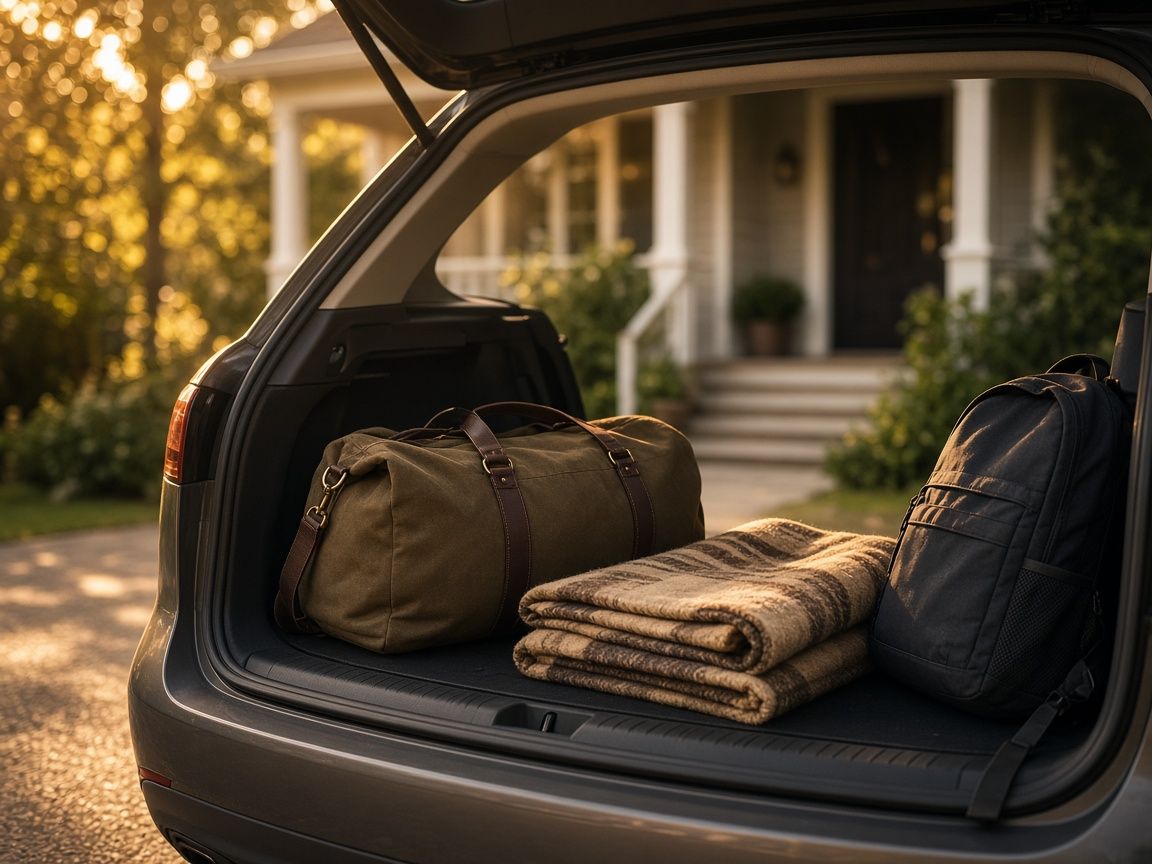
I work backward from my Monday start the same way I work backward from a 7 a.m. plant start on training days:
- Lights out at a time that gives the kids a decent shot at sleep, and me a chance to finish the kitchen
- A buffer for the item that is always missing
- Travel time
- A short, set window at the meeting point or at the door
- Dinner early enough that we are not eating in a rush in the driveway
I put those times in my phone as actual calendar blocks, not as a vague intention. If the other house and I can agree on a regular time, I protect it as if it were a meeting I cannot move. Moving it by 40 minutes “just this once” is how I end up walking into work on Monday already behind.
If a delay is real — traffic, a late activity, a sick child — I would rather get a short message early than a long explanation at the door. I try to give the same courtesy the other way.
The bag lives in both directions
The packing list is the same whether the kids are arriving or leaving. I keep a written list on my phone and a paper copy in the bag, because phones die and I do not want to rebuild this from memory in a doorway.
The bag has a permanent core:
- Tomorrow’s school or daycare clothes, already checked for size and weather
- A backup shirt and socks
- The comfort item that actually matters, not the three extras that turn the bag into a pile
- Any medicine they take, in the original packaging, with a simple note about what has already been given that day if that is relevant
- Homework or school folder, if there is one
- Charger for whatever device they are expected to have, if they are expected to have one
I do not pack a different personality for the other house. I pack what the child needs to have an ordinary next day. If something has to come back — a uniform, a instrument, a form — I put a tag on it or a note in the bag pocket. “It will probably come back” is not a system.
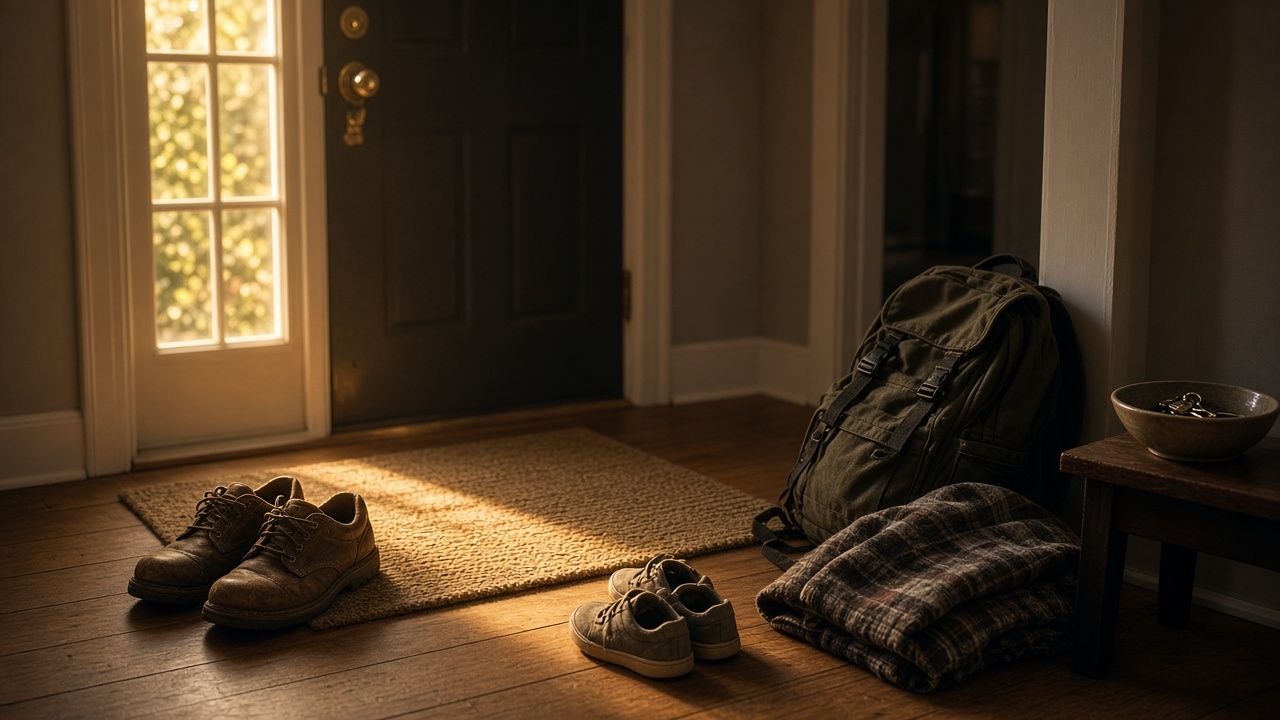
When the kids arrive at our house, the first five minutes are not a tour of the weekend. We unpack the bag into a single landing spot: hooks and a bin by the door. Shoes in the same place. Forms on the same dish on the counter. If I let the bag explode across the living room, I will be hunting at 6:20 a.m. while I should be leaving for work.
Dinner before the seam, not during it
If the handoff is in the early evening, I do not plan a complicated meal for the exact minute anyone walks in. I plan a meal that can wait 20 minutes without turning to leather: a sheet pan, a pot of something I can reheat, or leftovers I already trusted on a weeknight.
If the kids are leaving, we eat before we get in the car when we can. A child who is hungry at the door is a harder goodbye, and I am a shorter-fuse packer. If they are arriving, I have food ready enough that I am not starting a recipe while they are still holding a backpack.
I keep my own plate simple, in line with how I already eat. I do not use Sunday night to experiment. I also do not narrate anyone else’s plate. The job is to feed people and keep the evening moving.
The five-minute handoff I aim for
I have a short script for the door, and I use it even when I am tired, because tired is when I talk too much.
- Hi.
- Here’s the bag. Here’s what is inside that has to come back, or here’s what we already unpacked.
- Here’s anything practical: they already ate, they have a form in the folder, they seemed tired, they have a early morning tomorrow.
- See you at the usual time.
That is it. I do not use the doorway to process the weekend. I do not ask for a play-by-play. I do not offer one unless there is something the other adult actually needs to know for the next 12 hours. If a topic needs a longer talk, it can be a message later, when kids are not holding the bag.
I also try to keep my face ordinary. Kids read the adults at the seam. If I make the handoff look like a crisis, I have added a crisis. If I make it look like a regular Sunday, they can go inside and find their hooks.
After the car, before I sit down
The evening is not over when the door closes. This is the part I used to skip, and it is the part that saves Monday.
Once kids are settled — a bath if they need one, pajamas, the usual wind-down — I do a 15-minute close for myself:
- Work bag by the door, badge and keys in the same place
- Lunch in the fridge, already packed
- Clothes for me, in one stack
- A look at Monday’s calendar so I am not surprised at 6:35
- Devices charging where they belong, not in a child’s bed and not in my pocket in the dark
If I sit down on the couch first, the close does not happen. I have tested this enough times to stop testing it.
When the kids are not at our house that night, the close is faster, and the house is quieter. I still do it. The quiet is not a cue to stay up later just because I can. I have a 7 a.m. start either way.
What I do with the feelings
I miss them when they go. I am glad to see them when they come back. Both things can be true in the same hour, and neither thing is solved by a late-night speech in the kitchen.
If I need to say something to my wife, I say it after the kids are out of earshot and after the bags are unpacked. If I need 10 minutes in the garage to reset, I take them. I do not ask a child to comfort me about a schedule they did not invent.
I also do not grade the other house in front of the kids. If something in the bag is missing, I deal with the object, not the story about the object. If something went well, I can say I am glad they had a good time, and then we move into our evening. They already have a life in two places. My job is to make this place steady.
A Sunday that works is almost dull
The Sundays I am proud of would not look like much from the street. We ate at a normal time. The bag had what it needed. The handoff was short. The kids found their hooks. I packed my lunch. I went to bed on time enough to start work at 7 without being a person I would not want on the plant floor.
The Sundays that go badly usually have the same three failures: we started late, we packed mid-scramble, and I used the doorway as a conversation that should have been a message the next day. I cannot control traffic. I can control whether the list is written, whether dinner is already planned, and whether I close my own bag before I sit down.
Monday morning will still come early. The handoff’s job is to let it come in a regular way.