Work-Life
Sleep When You’re the 7 AM Person and the Baby Isn’t
Quick takeaways
- I protect a conservative sleep window, and I do not pretend a short night is a badge.
- When the baby is up, I cut training before I cut sleep.
- Sleep ranges from public-health sources are background, not a diagnosis.
Affiliate disclosure. This post may contain affiliate links. As an Amazon Associate I earn from qualifying purchases. See the full disclosure.
I am a 7 a.m. person by job, not by personality. The plant starts when it starts. The baby starts when the baby starts. Those two clocks do not negotiate, and I am the one who has to stand up anyway.
I am not going to tell you how to teach a baby to sleep. I am not a pediatrician, and I am not going to turn our nights into a method with a name. This is about how I protect enough sleep to be safe and decent at work the next morning, and how I stop the rest of the evening from stealing the little sleep that is still available.
The CDC’s sleep page says adults ages 18 to 60 should get 7 or more hours of sleep a day, and the NHLBI describes a common expert range of 7 to 9 hours a night for adults. I do not always hit that with a baby in the house. I still treat those numbers as a reminder that sleep is not a luxury I can indefinitely borrow against. If I am falling short for a stretch, I try to make the hours I do get more protected, and I ask for help in the house instead of pretending I can run on grit.
The part I can control is the close of the day
I cannot make a baby sleep through my alarm. I can stop doing the things that guarantee I will be useless when the alarm goes off.
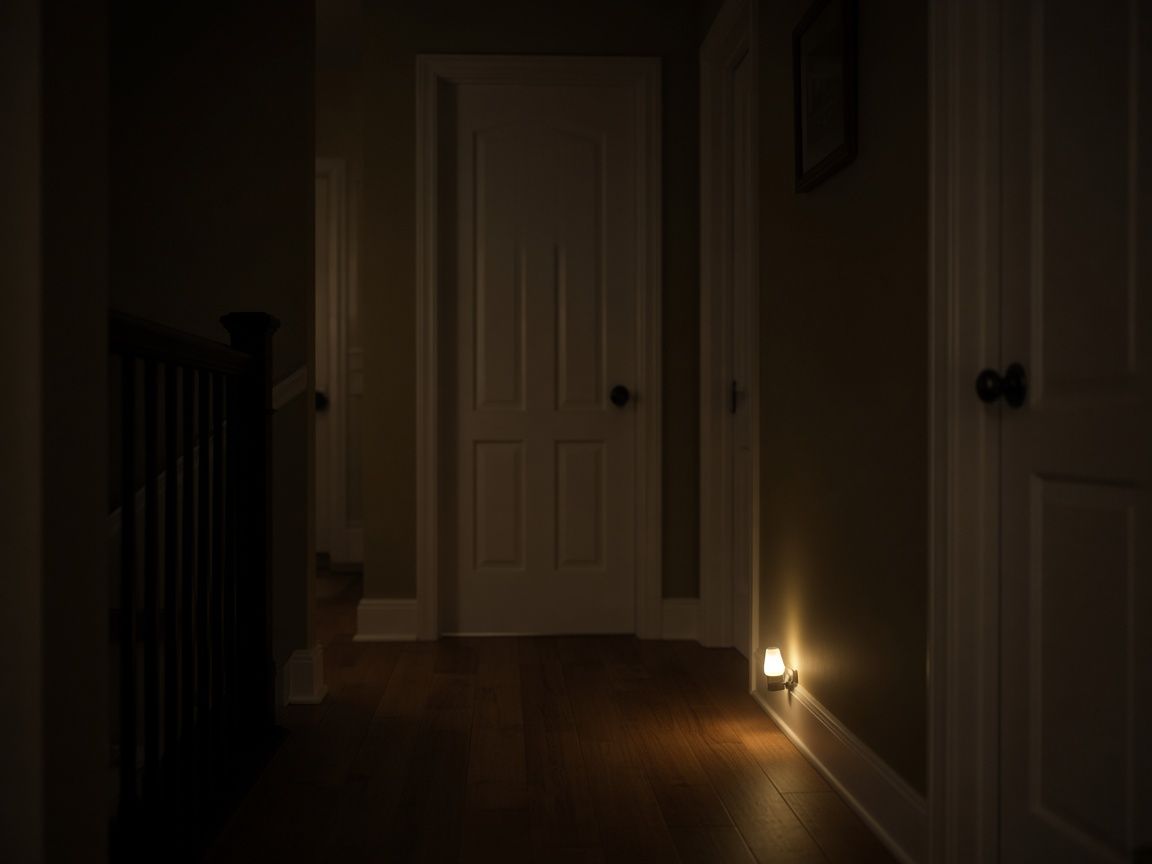
The evening leak is usually the same: one more message, one more “quick” look at a work problem, one more episode, a snack I did not plan, and a later bedtime that I justify because I “couldn’t have slept anyway.” Sometimes that last sentence is true. Often it is how I turn a partially hard night into a fully hard morning.
So I have a close, and I try to start it at a regular time even if the baby may get up later:
- Kitchen reset, including my lunch if it is not already packed
- Clothes for me, and a quick check that the diaper bag or changing area is stocked so a night wake is not also a scavenger hunt
- Phone charging outside the bedroom, or at least far enough from the pillow that I have to stand up to look at it
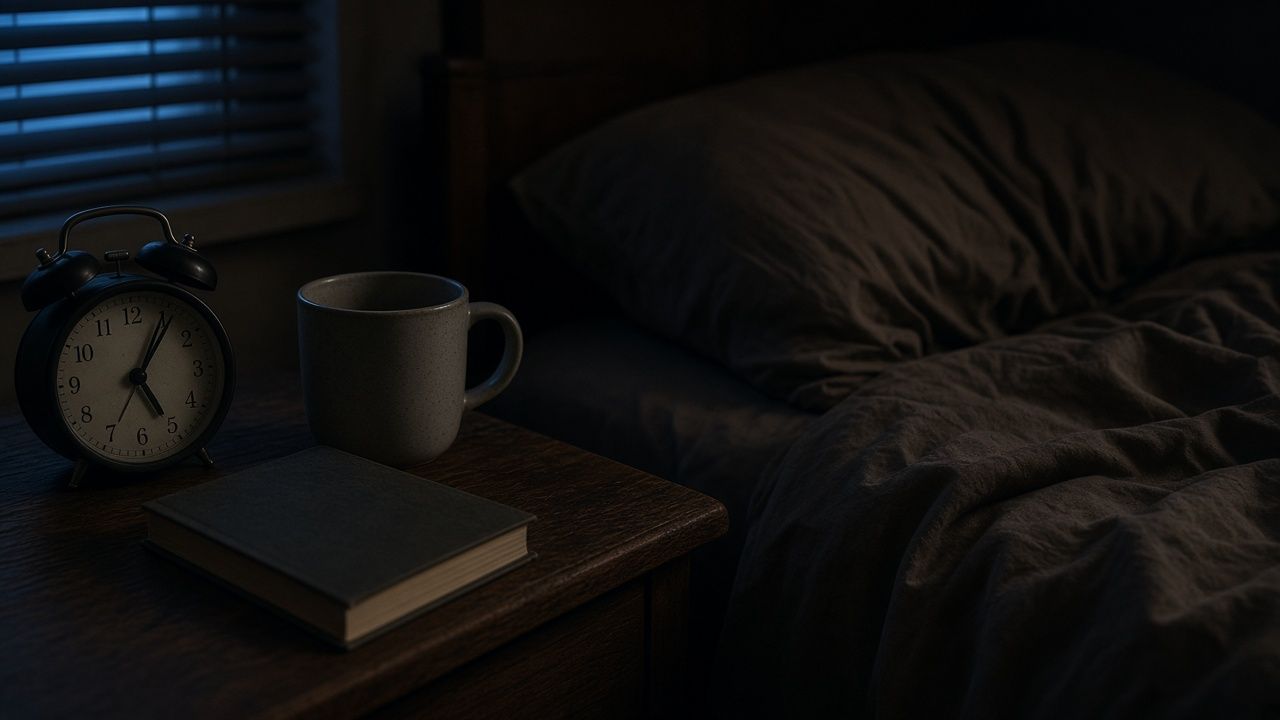
- Lights down, and a short, dull wind-down — a paper book, a shower, or sitting with my wife for a few minutes without a screen between us
I am not strict about a perfect routine. I am strict about not opening a laptop in bed. Work problems are rarely solved at 10:40 p.m. in a way that makes 5:40 a.m. easier. They are usually just transferred into my sleep.
Sharing the night without keeping score out loud
In a house with two adults, the night has to be a shared system or one person becomes the night shift and the 7 a.m. person becomes a hazard. We talk about the week in advance when we can: who is more able to take the first wake, who has the earlier morning, who is already running on a short week.
I do not always get the easy assignment. Sometimes I have the early start and I still take a stretch of the night because that is what the house needs. When that happens, I try to tell the truth the next day instead of silently collecting points. “I am short on sleep and I need an earlier close tonight” is more useful than a speech. My wife cannot read a deficit I am performing as competence.
I also try not to turn a wake-up into a second day. If I am up with the baby, the job is the baby, not the kitchen redesign, not email, not a replay of a work conversation. The faster I can get back to actually lying down, the better. Lying in the dark resenting the clock is not rest, but neither is starting a project.
If you are doing nights alone in your house some of the time, the same principle holds with fewer options: reduce the extras. Water, a changing setup you can do half-asleep, and a return to bed. I know that is easier to type than to live. I still need the reminder.
Mornings after a broken night
There is a version of me who tries to “catch up” by skipping the garage, skipping breakfast prep, and also staying up later the next night because the day already feels lost. That version of me has a worse week.
After a broken night I use a short list:
- I still get up for work. The plant does not pause.
- I drop the optional 20-minute training session without guilt if I am unsafe or badly uncoordinated. A walk at lunch is allowed. A hero workout after a 3 a.m. wake is not a badge.
- I keep caffeine earlier than I want to. Late coffee is a loan I repay at 11 p.m.
- I tell the people who need to know that I am a little slower, if that would matter for safety or patience. I work in a plant. Sleep is a safety issue, not just a mood issue.
- I aim for an earlier close the next evening, not a later one.
If I am so tired that I should not be driving or I should not be around certain work, that is a talking-to-someone problem, not a personal-motivation problem. I would rather swap a task or ask for help than pretend I am fine. I cannot give you a rule for your job. I can tell you I take that more seriously now than I did before I had a baby and a 7 a.m. start in the same life.
What I do not do
I do not compare our baby to a chart in a group message and decide we are behind. Sleep ranges for infants and children are published — the CDC page has a table by age — but a table is not a diagnosis, and I am not qualified to interpret a particular child’s nights. If a pattern worries us, that is a question for the child’s clinician, not for a comment thread.
I do not use this site to describe a sleep-training method, a cry plan, or a feeding schedule presented as advice. Those are personal medical and parenting decisions, and they should stay between a family and their professionals.
I do not use alcohol as a sleep aid. It can make the first part of the night feel easier and the second part worse. I also do not invent a supplement stack for sleep and tell you to take it. If I ever mention a product I use, it will be as a personal habit, not as a treatment, and it will still not be advice for you.
Protecting the hours that are left
When the night will clearly be interrupted, I get more careful about the hours before the first wake. I keep the room as dark and ordinary as I can. I avoid turning a 9 p.m. feeding or settling into a brightly lit social hour with my phone. I drink enough water through the day that I am not slamming a pint at 10:30 and then adding a second reason to get up.
On nights the older child is also in the house, I try not to stack a late movie or a special exception onto a baby night just because I want the evening to feel like a win. The older child deserves time with me. That time is better at 6:30 p.m. on the floor than at 9:45 p.m. when tomorrow is already coming for all of us.
Weekends are not automatically a chance to shift my clock by three hours. If I have the kids, the morning still comes early. If I do not, I can sleep later, and I sometimes do. I try not to shift so far that Sunday night becomes another problem. Sunday already has the handoff. It does not need a second job.
The standard I use
I will not always get 7 hours. I still plan as if 7 hours is worth protecting, because the CDC and NHLBI numbers are a clearer standard than “I’ll sleep when things calm down.” Things calm down and then they get loud again.
The job is to be a person who can start work at 7 without becoming harsh at home or sloppy at the plant. The tools I have are ordinary: an earlier close, a shared night when I have another adult in the house, fewer late-night screens, and the humility to drop the optional work when the required work — a baby, a job, a Monday — has already used the hours.
If sleep problems are ongoing, or if you are worried about your own health or your child’s, talk with a clinician. I can only describe the rails I put on my evenings so a hard night does not also become a hard morning I designed myself.
Sources
- Centers for Disease Control and Prevention, “About Sleep,” including recommended daily sleep by age (adults 18–60: 7 or more hours): cdc.gov/sleep/about/index.html
- National Heart, Lung, and Blood Institute, “How Much Sleep Is Enough?” (experts often recommend 7 to 9 hours a night for adults; regularly sleeping less than 7 hours may be tied to more health issues): nhlbi.nih.gov/health/sleep/how-much-sleep
Medical disclaimer. This is personal experience, not medical advice, and it is not a substitute for care from a qualified professional. Talk with your own clinician before changing how you eat, train, fast, or sleep, especially if you have a medical condition, take medication, are pregnant, or are feeding a baby. Read the full medical disclaimer.