Keto & IF
Keto Lunches I Pack at 9 PM After the Kids Are Down
Quick takeaways
- I pack lunch at 9 p.m. so the morning can stay short.
- The box is simple: protein, a fat, and something green I will actually eat cold or reheated.
- Keto is a way I eat, not a medical claim, and it is not right for everyone.
Affiliate disclosure. This post may contain affiliate links. As an Amazon Associate I earn from qualifying purchases. See the full disclosure.
If lunch is not in a container before I go to bed, lunch becomes a 6:25 a.m. problem, and I do not have room for a 6:25 a.m. problem. I start work at 7. The morning already has a garage session some days, a baby, and a bag that needs to be by the door. The only packing time that reliably exists is after the kids are down, usually around 9 p.m., when the kitchen is finally quiet enough to hear myself think.
I eat in a lower-carb, ketogenic-style way, and I pack lunch to match that. I am not going to tell you to eat this way. Harvard Health Publishing has described a true ketogenic diet as a very low-carbohydrate, high-fat pattern that is used clinically in some cases and is sometimes tried for weight loss, and it has also described risks and the need to talk with a doctor and a registered dietitian before attempting it. I am not your doctor or your dietitian. This is a packing list for the way I already eat, plus the logistics of a plant break room.
Why 9 p.m. is the only slot that works
I have tried Sunday batch-cooking like a person with a clean calendar. Sunday evenings in this house are often a handoff, a bag, and an early close so I can start work at 7 Monday. I have also tried packing at 6 a.m. That version of me is groggy and optimistic about leftovers that are not actually there.
Nine p.m. is late, but it is predictable. The kids are down. I can see what is in the fridge. I can put one or two days of lunch into containers, not twelve. I am not running a meal-prep business. I am buying tomorrow-me a decision I will not have time to make well.
The rule is: if I am already in the kitchen, I do not leave it until tomorrow’s lunch exists. I can be tired. I cannot be unprepared at 6:25.
What “survives a microwave” actually means
The break room microwave is not a restaurant. It is a shared box with a dirty door and a line of people who also have 12 minutes. I pack for that reality.
A lunch that works for me has four traits:
- It reheats in two minutes or less, or it tastes fine cold.
- It does not explode, drip, or require three containers I will lose.
- It is filling enough that I am not hunting the vending machine an hour later, without being a brick.
- It matches how I eat, so I am not improvising a second lunch from chips.
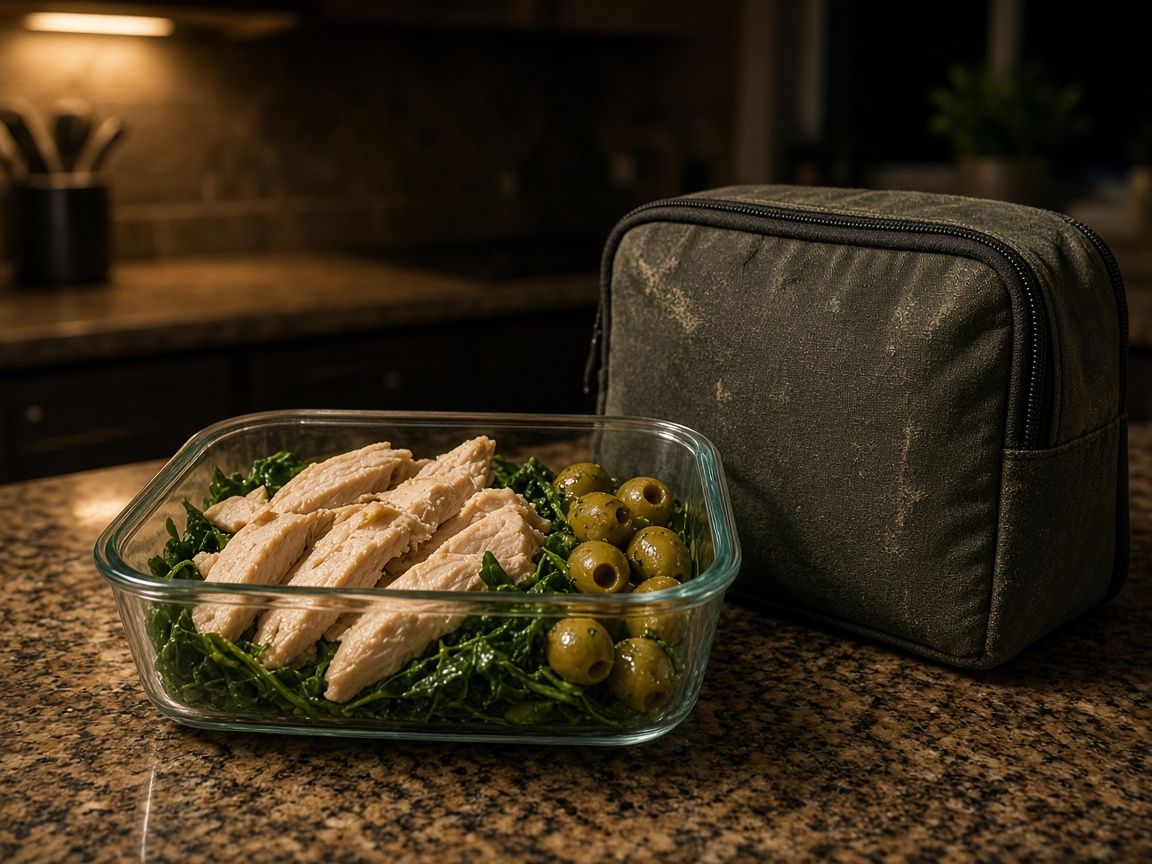
I use one main container and one small one. The main holds the protein and the vegetables. The small one holds something wet or separate: a dressing, some olives, salsa, or a sauce that would make the vegetables sad if it sat in there all morning. I put a fork in the bag. I have forgotten the fork enough times to stop forgetting the fork.
I do not pack foods that turn to rubber or soup in a shared microwave if I can help it. Breaded things get soggy. Delicate leftover steaks get sad. A pile of leafy salad with warm chicken on top is fine if I keep the dressing off until I eat. A pile of mixed leftovers that I would not eat at my own table does not become better at noon.
The rotation I can pack half-asleep
I do not invent a new lunch at 9 p.m. I run a short rotation of patterns, and I only need to fill in the ingredients.
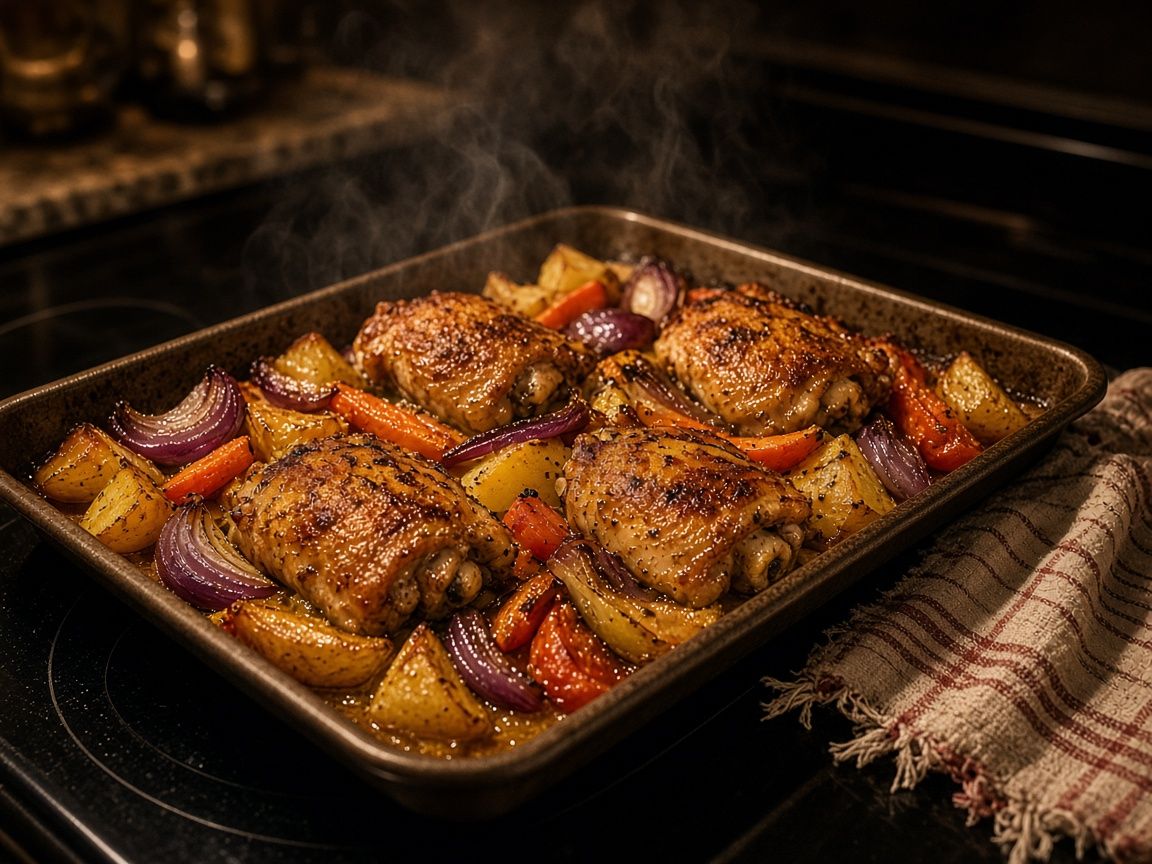
The bowl. Leftover protein from dinner — chicken thighs, ground beef, a pork shoulder I cooked on the weekend, salmon if I already made it — plus a heap of cooked vegetables. Broccoli, cauliflower, green beans, sautéed cabbage, peppers, zucchini. Olive oil or butter already on them so I am not pouring oil in the break room. Salt already done.
The frittata or egg bake slice. If I have 25 minutes on a Sunday or a rare evening, I bake eggs with spinach, cheese, and leftover vegetables in a small pan. I cut squares. They reheat. They also taste fine lukewarm, which matters when the microwave is occupied.
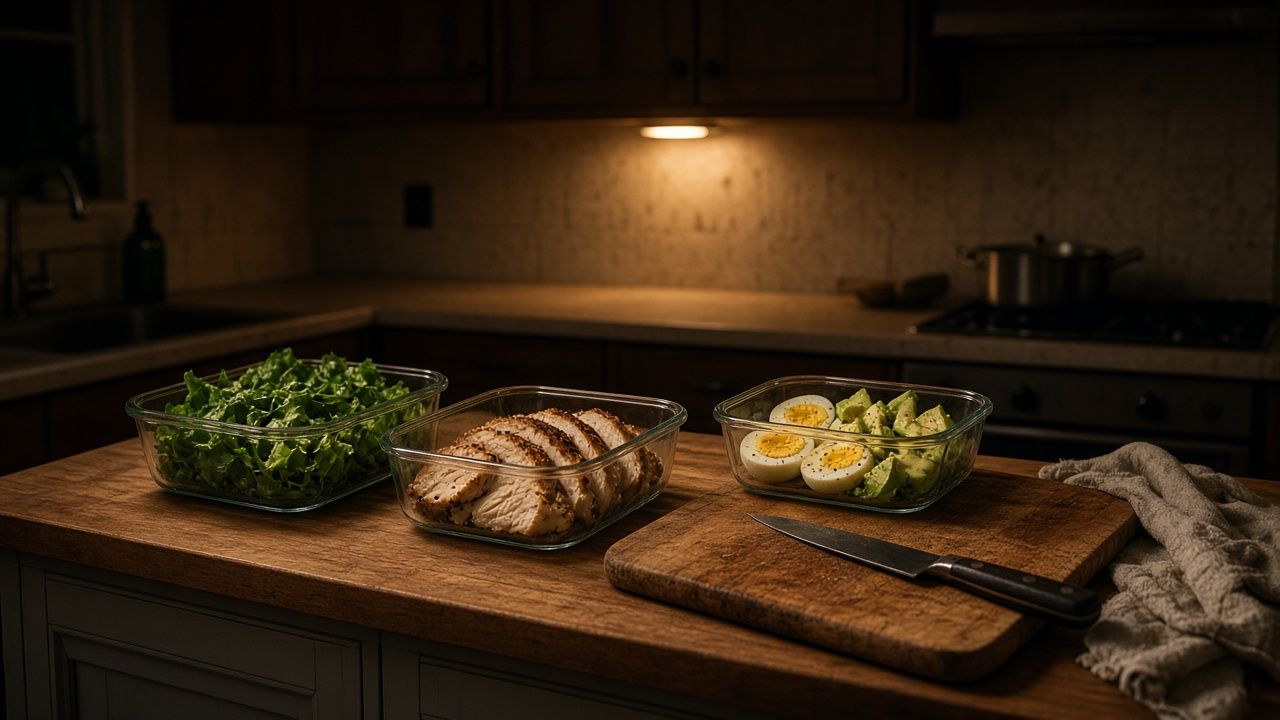
The cold box. Tuna or leftover chicken, a hard-boiled egg if I peeled a few in advance, cucumber, cherry tomatoes, cheese, and olives. No microwave required. This is the lunch I pack when I know I will not want to stand in the microwave line, or when I will be on the floor and eating between tasks.
The soup or skillet leftover. A thicker chili or a skillet of meat and vegetables, packed in a container I trust not to leak in my bag. I leave a little headroom so it does not erupt in the microwave. I stir it halfway if I can.
I add a simple side when I need more food: a handful of nuts in a small bag, a few strawberries or a small portion of berries if that still fits how I eat that day, or some extra vegetables I can eat cold. I do not need a dessert course that turns into a second grocery habit.
If dinner already produced a suitable leftover, 9 p.m. packing is just a transfer into a container. That is the ideal night. If dinner was a kid-food night and my plate was different, I still make my lunch out of what I cooked for myself, or I fall back to the cold box.
Grocery rules that keep 9 p.m. short
A late packing session fails when the fridge has “ingredients” but no actual food. I grocery-shop with lunch in mind, not just dinners.
I keep a standing list:
- A protein I can cook once and eat twice (a pack of thighs, a family pack of ground meat, eggs)
- A mix of vegetables that roast or sauté well and also taste fine leftover
- Something that needs no cooking: canned fish, pre-washed greens, cucumbers, cheese, olives
- Olive oil, salt, a hot sauce I actually like
- Containers with lids that still seal
I do not require specialty products to pack lunch. If I use a specific item I like, I will say so, and I will disclose a link if I ever add one. Most nights the lunch is groceries, not a brand.
I also cook one extra portion at dinner on purpose. The 9 p.m. job is easier when 6:30 p.m. me was generous.
What I do when the night is too far gone
Some nights the baby is up, or the handoff ran late, or I am too tired to cook anything new. I have a fallback that still counts as packing:
- Canned fish, a cheese stick, a cucumber, and nuts
- Leftover eggs and a few vegetables I can eat cold
- The last portion of whatever I already trusted this week, even if it is not exciting
Exciting is not the standard. The standard is that I will not be standing in a convenience store at 11:30 a.m. making a decision I will not be proud of, then coming home irritated at a problem I created at 9:12 p.m. when I walked out of the kitchen empty-handed.
If I am sick, or if I need a different kind of meal, I pack that instead and I do not try to win a consistency award. The packing habit is there to serve the day, not to grade me.
Eating it like a person at work
At lunch I heat the container, I sit down if I can, and I eat it like a meal. I do not eat it over a keyboard if I can avoid it, because I will not notice I have finished and I will also not notice I am still tense. A 12-minute sit in a cheap chair is still a break.
I do not talk about my lunch unless someone asks. I work with people who eat all kinds of food. I am not a missionary for a way of eating that Harvard and others have already said is not a casual experiment for everyone. I also do not need a colleague to admire a plastic container of chicken and broccoli.
If there is a staff lunch or a tray of food in a meeting, I decide in advance whether I will eat what is offered or eat what I brought. I do not like making that decision in the room while I am hungry and someone is watching. Either choice can be polite. The unplanned third choice — a little of everything, then my container, then something from the table again — is how I get back to the old problem.
The 9 p.m. close
When the lid is on and the container is in the fridge, I am done. I do not start a second project in the kitchen. I rinse the cutting board, I set a fork in the bag, and I leave the room. Morning-me can grab the bag and walk out the door.
That is the whole system: a short rotation, leftovers on purpose, a fallback that requires no cooking, and a hard stop so packing lunch does not become the thing that also steals sleep. The long day is easier when noon is already decided.
Sources
- Harvard Health Publishing, “Should you try the keto diet?” (March 28, 2024; reviewed by Howard E. LeWine, M.D.). Describes a ketogenic diet as very low in carbohydrates and high in fat, discusses possible risks, and advises talking with a doctor and a registered dietitian before attempting it: health.harvard.edu/staying-healthy/should-you-try-the-keto-diet
- National Institute on Aging, “Calorie restriction and fasting diets: What do we know?” (for related caution on major eating-pattern changes and the advice to speak with a healthcare provider): nia.nih.gov/news/calorie-restriction-and-fasting-diets-what-do-we-know
Gear I actually use
- Glass containers with lids that actually sealI pack at night and do not want a leak in the bag at 6 a.m.
- A small insulated bagIt has to fit in the work bag I already carry.
Product links will appear here when they are live. No affiliate links in this box yet.
Medical disclaimer. This is personal experience, not medical advice, and it is not a substitute for care from a qualified professional. Talk with your own clinician before changing how you eat, train, fast, or sleep, especially if you have a medical condition, take medication, are pregnant, or are feeding a baby. Read the full medical disclaimer.