Keto & IF
How I Grocery-Shop Once a Week for Keto With a Kid in the Cart
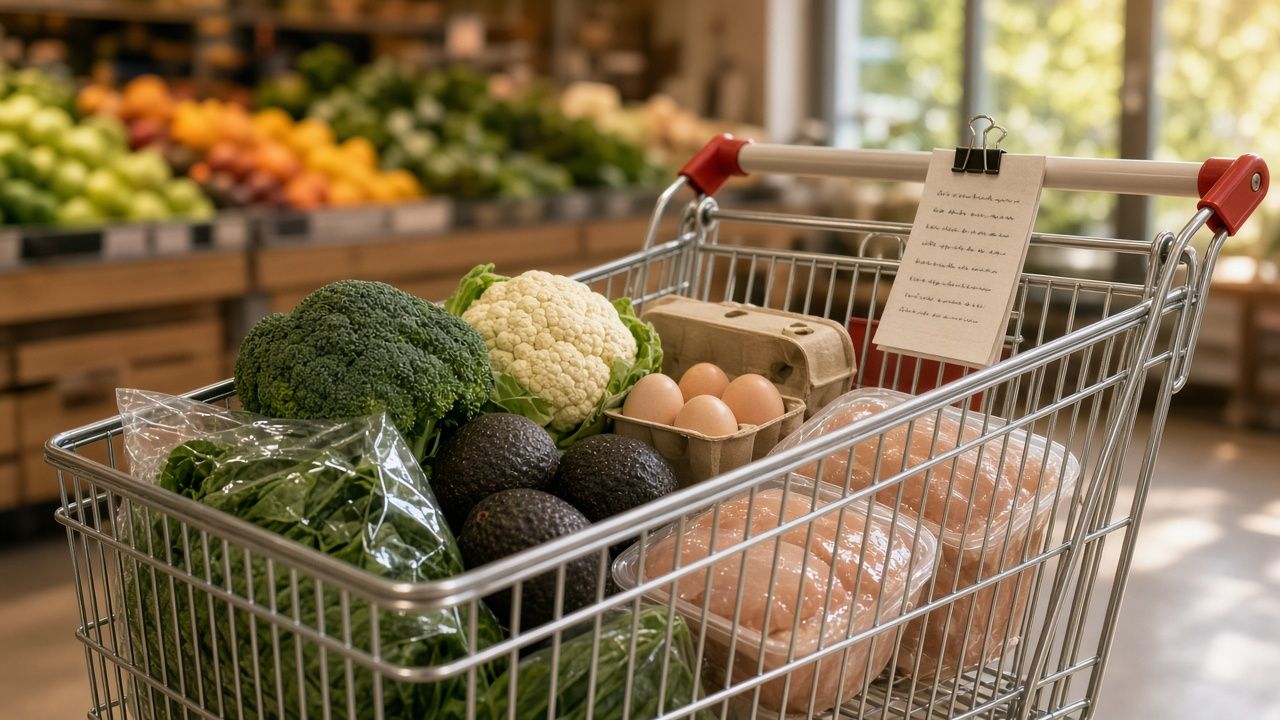
Quick takeaways
- I shop once a week from a list built in store order, so the trip stays under an hour even with a kid in the seat.
- I buy proteins in two waves: what I will cook in the first two days goes in the fridge, the rest goes straight in the freezer.
- The list is built around meals, not ingredients: four dinners, a lunch rotation, and a no-cook fallback.
- The kid gets a job in the cart. A bored kid ends trips early; a busy one helps finish them.
- Keto is how I eat, not a recommendation. Talk to your own doctor or dietitian before a big diet change.
Affiliate disclosure. This post may contain affiliate links. As an Amazon Associate I earn from qualifying purchases. See the full disclosure.
The week goes better when I only walk into a grocery store once. Every extra stop is twenty-five minutes I do not have on a weeknight, and a Wednesday-night “quick run” with a tired kid is never quick. I start work at 7 a.m. and I am often there past 5. By the time I get home, the window for a calm errand has closed.
So I shop once, usually on a weekend morning, with a kid in the cart seat more often than not. I eat in a lower-carb, ketogenic-style way with an eating window, and the rest of the house does not eat exactly the way I do. The trip has to cover both without turning into two carts and an argument in the cereal aisle.
I am not telling you to eat keto. Harvard Health Publishing describes a ketogenic diet as very low in carbohydrates and high in fat, notes possible risks, and advises talking with a doctor and a registered dietitian before trying it. This post is about logistics: how one trip feeds a long week.
The list gets built Friday night, in five minutes
I do not build the list in the store. I build it on Friday or Saturday night, from three questions:
- What four dinners am I cooking this week? Not seven. Four, plus leftovers, plus one night that is simple by design.
- What does the lunch rotation need? I pack lunch at night, so the list has to include whatever makes that easy: a protein I can cook once and eat twice, vegetables that reheat, and a no-cook option.
- What ran out? I check the fridge door, the egg count, the oil, the salt, the coffee. Running out of coffee on a Tuesday is a self-inflicted wound.
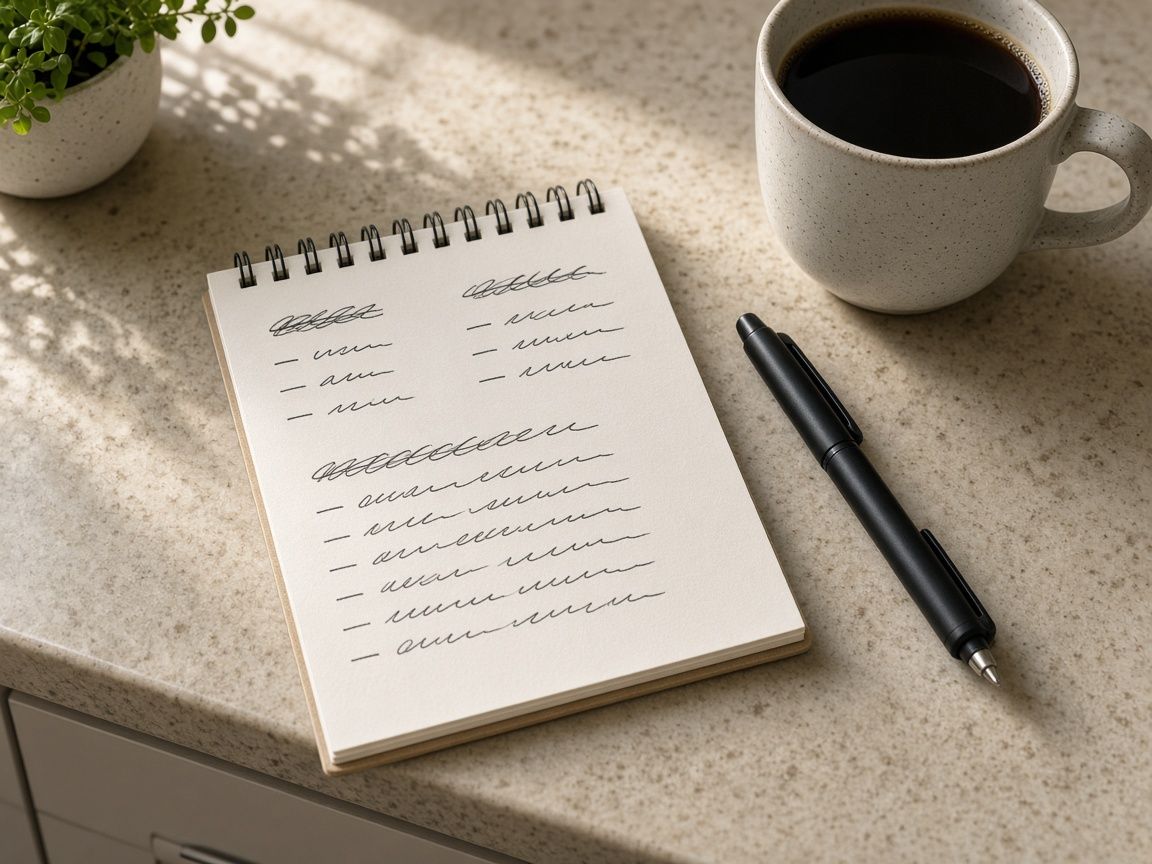
Then I rewrite the list in the order I walk the store. Produce, then meat, then dairy and eggs, then the few center aisles I need, then frozen last. That one step does more for the trip than any coupon. If the list matches the floor, I do not backtrack, and backtracking is where a kid in the cart runs out of patience.
I keep the list on paper clipped to the cart handle. My phone is busy being a phone, and I do not want to unlock it with one hand while the other hand is stopping a cart from rolling into a display.
The base list that barely changes
Most weeks, about 80 percent of the cart is the same. I do not reinvent it. The standing list looks roughly like this:
Proteins
- A family pack of chicken thighs
- Ground beef, sometimes two packs
- One bigger cut for a weekend cook (pork shoulder, a roast, or a couple of steaks)
- Eggs, more than I think I need
- Canned tuna or salmon for no-cook lunches
Vegetables
- Broccoli and cauliflower (they roast well and taste fine reheated)
- Bagged spinach or mixed greens
- Zucchini, peppers, green beans, or cabbage, whatever looks decent
- Cucumbers and cherry tomatoes for cold lunches
- Avocados at two stages of ripeness, so they are not all ready on the same day
Fats and staples
- Butter, olive oil, block cheese
- Olives, a hot sauce I like, salt
- Coffee
The rest of the house gets its own short section on the same list: fruit, bread, the snacks that actually get eaten, and whatever the baby is into this month. One list, one cart, two sections. I am not building a separate food world. I am just making sure my part of the week exists.
Buying protein in two waves
This is the part that makes a once-a-week trip actually last a week.
The FDA’s refrigerator and freezer storage chart lists raw ground meat and raw chicken parts at 1 to 2 days in the refrigerator, and steaks at 3 to 5 days. Eggs in the shell are listed at 3 to 5 weeks. Cooked leftovers are 3 to 4 days in the fridge, according to the USDA’s Food Safety and Inspection Service. I do not memorize those numbers so much as build the week around them.
So when I get home:
- Wave one goes in the fridge. Whatever I am cooking in the first day or two — usually the chicken thighs and one pack of ground beef — stays in the refrigerator, on the lowest shelf, on a tray, so nothing drips on anything else.
- Wave two goes straight in the freezer. The second pack of ground beef, the weekend cut, anything I will not cook in the next day or two. I write the day on the package with a marker.
- I move wave two to the fridge the night before. If Wednesday is a ground beef night, the pack moves from freezer to fridge on Tuesday night when I pack lunch. That habit is the whole trick.
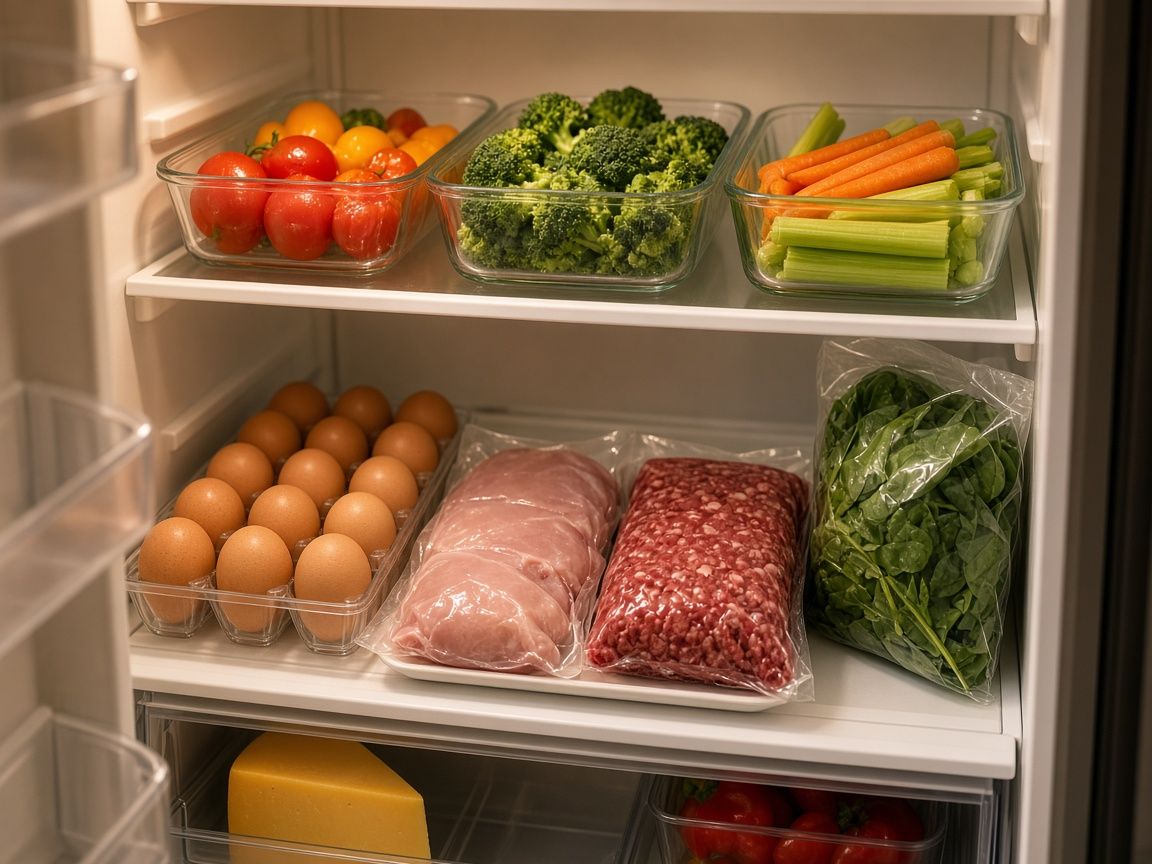
If I skip the freezer step, I end up cooking everything on Sunday and Monday or throwing something out on Thursday. Neither is the plan. The freezer is not a backup in my house. It is the second half of the week.
How the kid rides along
I usually have a kid in the cart. Sometimes that is the baby, sometimes the older one wants to come, and sometimes both. The trip is designed around that, not in spite of it.
What works for us:
- I go early. A weekend morning store is quieter, the shelves are stocked, and the kid has not burned through the good part of the day yet.
- The kid gets a job. Holding the list. Spotting the broccoli. Counting the avocados into the bag. Putting the eggs in the cart with two hands. A busy kid is a happier kid, and frankly a busy dad is too.
- The cart has a snack, and I decide it before we walk in. I do not negotiate snacks in the checkout lane. It is already in the bag.
- The center aisles are short visits. I know which three I need. I do not browse. Browsing is how a fifty-minute trip turns into ninety with someone crying in aisle nine.
- I leave before the meltdown, not after. If the trip is going sideways, I skip the “nice to have” items and check out with the core list. The core list is what feeds the week.
I do not use the trip to make points about food. The kid sees vegetables, meat, eggs, fruit, and some snacks in one cart. That is enough of a lesson. My eating window and my lower-carb plate are mine. They do not need narration in the produce aisle.
Prep that happens before the bags are put away
The trip is not done when the car is parked. The next twenty minutes decide whether the week is easy or not.
Before I sit down, I do four things:
- Freeze wave two. Labeled, dated, flat if I can so it thaws faster.
- Wash and cut one or two vegetables. Usually broccoli into florets and peppers into strips, into glass containers. It is the difference between roasting a pan of vegetables on Tuesday at 6:15 and deciding it is too much.
- Hard-boil a batch of eggs. They go into the lunch rotation, the no-cook fallback, and sometimes a quick breakfast for someone else in the house.
- Put the list paper on the fridge. I start next week’s list on the back of this week’s. When something runs out midweek, it goes on that paper, not into a Wednesday-night errand.
If the weekend is full and I only get two of those done, I do the freezer and the eggs. Those two buy the most time later.
What I skip on purpose
A once-a-week trip only works if I keep the cart honest. I skip:
- Specialty keto products I would not otherwise buy. I do not need a bar or a snack that costs more than the chicken. Most of my week is just groceries. If I ever recommend a specific product here, I will say so and disclose any link.
- More fresh produce than I can eat. If the greens wilt by Friday, I bought too many. I would rather buy a bag of frozen broccoli as a backstop than throw out fresh spinach.
- Five new recipes. One new thing a week, at most. The rest is the rotation I can cook half-asleep after a long shift.
When the week breaks anyway
Some weeks the plan does not hold. A shift runs long, the baby has a rough few nights, the weekend cook does not happen. When that happens, I lean on what the trip already put in the house:
- Eggs and whatever vegetables are cut
- Canned fish, cheese, cucumbers, olives
- A pack of ground beef from the freezer, thawed in the fridge overnight, cooked in one skillet
That is not a great dinner. It is a fine one, and it keeps me from a midweek store run or a drive-through I did not plan. The point of the weekly trip is not perfection. It is that the fallback is already in the fridge.
The short version
One list, built at home, in store order. One trip, early, with a kid who has a job. Protein in two waves: fridge for the first two days, freezer for the rest, moved down the night before. Twenty minutes of prep before the bags disappear. That is how a lower-carb week survives a 7 a.m. start and a kid in the cart.
Sources
- Harvard Health Publishing, “Should you try the keto diet?” (March 28, 2024; reviewed by Howard E. LeWine, M.D.). Describes a ketogenic diet as very low in carbohydrates and high in fat, discusses possible risks, and advises talking with a doctor and a registered dietitian first: health.harvard.edu/staying-healthy/should-you-try-the-keto-diet
- U.S. Food and Drug Administration, “Refrigerator & Freezer Storage Chart.” Lists refrigerator times at 40°F of 1–2 days for raw ground meat and raw chicken or turkey parts, 3–5 days for steaks, and 3–5 weeks for fresh eggs in the shell: fda.gov/media/74435/download
- USDA Food Safety and Inspection Service, “Leftovers and Food Safety.” States leftovers can be kept in the refrigerator for 3 to 4 days or frozen for 3 to 4 months: fsis.usda.gov/food-safety/safe-food-handling-and-preparation/food-safety-basics/leftovers-and-food-safety
Gear I actually use
- A cheap clip for the cart handleThe list stays where I can see it instead of in a pocket under a car seat strap.
- Two insulated grocery bagsMeat and cold stuff ride home together, especially on a Florida afternoon.
Product links will appear here when they are live. No affiliate links in this box yet.
Medical disclaimer. This is personal experience, not medical advice, and it is not a substitute for care from a qualified professional. Talk with your own clinician before changing how you eat, train, fast, or sleep, especially if you have a medical condition, take medication, are pregnant, or are feeding a baby. Read the full medical disclaimer.